.png)
Clinical Training at Mkhitar Gosh University: Hospitals & Practical Learning
For medical students, the classroom knowledge gains relevance when it is related to actual clinical practice. Clinical education at Mkhitar Gosh University clinical training is intended to ensure that knowledge acquisition takes place through practical learning with advanced medical equipment and clinical exposure. Mkhitar Gosh University has a six-year-long MBBS course and emphasizes practical skills as one of its approaches to medical education.
Indian students interested in MBBS practical training in Armenia need to know the clinical education process. Students need to have access to practice in examination, diagnostics, communication, and patient care. The MGARIU official documents prove that emphasis is put on practical skills and clinical bases.
How Clinical Training Supports Medical Education at Mkhitar Gosh University
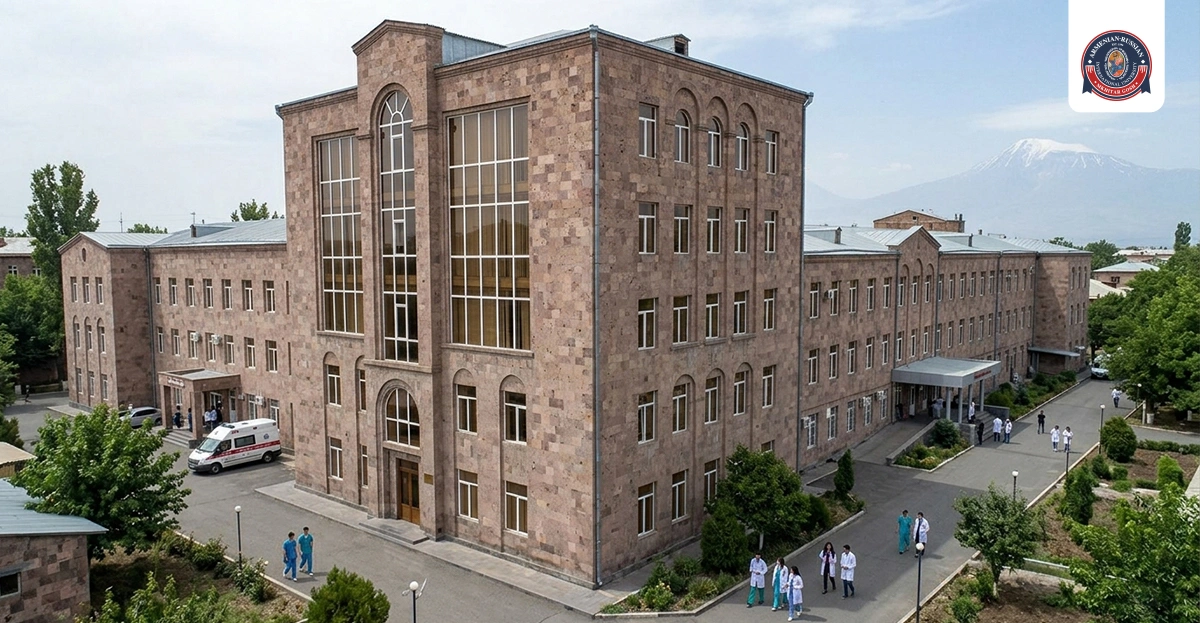
The move from pre-clinical subjects to clinical medicine represents a vital stage in medical education. According to the information on its website, the university characterizes its educational environment as one that blends academic education with contemporary practical training. Its current website also features smart labs and practical training via simulation facilities.
The academic literature at the university also mentions practical competencies associated with clinical bases, which involve medical instrumentation, lab information, ECG and X-ray data, and practical training on models, phantoms, and other training aids.
This methodology will help students gain confidence step by step as they face more complicated clinical tasks.
Practical Learning and Clinical Exposure Armenia Students Can Expect
Armenia Clinical Exposure is significant for students looking at opportunities for medical study in foreign countries. Practical work must not be seen as just the observation of doctors. It should help students gain insight into the practical application of theoretical knowledge in evaluating patients' conditions and addressing clinical cases. The university's academic literature includes competencies such as:
- Knowledge about patients' health conditions and medical needs.
- Development of practical diagnostic abilities.
- Using laboratory and diagnostic information.
- Understanding ECG and X-ray results
- Development of communication and patient assessment abilities.
- Use of medical equipment and simulators.
- Application of theoretical medical knowledge to clinical practice.
The current university website also mentions that medical infrastructure of the university includes laboratories and clinical training centers.
Hospital-Based Learning at Mkhitar Gosh University
Hospital practice is one of the key factors in undergraduate medical training, as it enables the student to experience the practice of treatment in a real healthcare institution.
When mentioning the hospital component of clinical training at the Armenian Russian International University, one should clarify whether one is talking about university hospitals or external clinical practices. The information publicly available in the materials of the university for this article does not contain a list of the latest names of hospitals affiliated with it. Hence, students should consult the university regarding the latest hospitals where clinical practice is performed before admission.
From the point of view of the academic material provided by the university, students' clinical practice can be conducted in clinical practice and healthcare institutions, including hospitals and polyclinics.
This is an important point for prospective students: clinical training should be evaluated based on the actual clinical rotation structure, not simply the number of hospitals associated with a university.
From Simulation Labs to Real Clinical Situations
Simulation-based learning can allow medical students to practise skills in a controlled environment before applying them in clinical settings.
MGARIU currently promotes smart laboratories and hands-on experience through modernised simulation facilities. Its academic material also refers to practical assessment using coaches, models, phantoms and medical equipment. This type of training can help students work on fundamental skills such as:
|
Practical Learning Area |
What Students Develop |
|
Simulation training |
Basic clinical confidence |
|
Patient assessment |
Observation and examination skills |
|
Diagnostic information |
Interpretation and clinical reasoning |
|
ECG and X-ray exposure |
Understanding diagnostic investigations |
|
Laboratory data |
Connecting investigations with clinical conditions |
|
Medical equipment |
Familiarity with clinical tools |
|
Communication |
Patient interaction and professional behaviour |
The objective is to make learning more practical rather than relying only on lectures and textbooks.
Clinical Training and Medical Skills Development
Clinical education does not simply entail remembering disease and treatment information. The students should learn the art of approaching patients and making decisions based on the right information.
Academic publications of MGARIU have focused on professional and practical training. These have mentioned that competence is measured through clinical bases and demonstration of medical information using medical devices, laboratory results, ECG, and X-rays.
There have also been academic presentations on clinical cases at the university. For instance, in March 2025, the students participated in a presentation on oncology. The presentation included some clinical cases presented by the lecturer from his own practice.
These can complement the normal academic curriculum in the institution by providing information on clinical reasoning and medical discussion.
What Indian Students Should Check Before Admission
While choosing MBBS in Armenia, clinical education should be verified carefully before joining any university. The university should provide up-to-date information on:
- Clinical hospitals and health care institutions where rotations would take place
- Departments where clinical postings would take place
- Timings and duration of clinical rotations
- Opportunities for interacting with patients
- Facilities for practical learning and simulation learning
- Internship program after completion of the program
- Documents provided for clinical training and internship
The above information is especially relevant for Indian students since the National Medical Commission has its own criteria for foreign medical graduates. The current regulations and FAQs of NMC differentiate between clinical postings/learning during the medical course and internship after completing the course.
Thus, students should verify their NMC requirements depending upon the year of their admission rather than depending upon general information regarding recognition or clinical exposure.
Why Practical Learning Matters for MBBS Students
The balance between theoretical teaching and practical training may allow students to feel more comfortable when interacting with patients in the clinical setting. For an international student, practical training may allow him/her to learn about the manner in which healthcare providers communicate with patients and function as part of a healthcare team.
At MGARIU, the inclusion of laboratories, simulation training, and a clinical training center adds the practical element to the educational approach at the university.
It is important for potential applicants to check the current rotation plans offered by the university before accepting the offer of admission.
Conclusion
The clinical training at Mkhitar Gosh University constitutes a very significant part of the medical education system at the institution that integrates theoretical education with practical facilities, simulation, and clinical training. The materials provided by the university mention laboratories, clinical training facilities, practical examinations, and clinical bases as being parts of the medical education process.
While choosing an MBBS practical training Armenia, students must learn more about clinical postings, clinical rotations, simulation training, and internships, other than just classroom teaching. Indian students are advised to first learn about the new NMC requirements.
FAQs
Does Mkhitar Gosh University provide practical medical training?
Yes. The university's official website highlights practical training, smart laboratories, and clinical training facilities, while its academic documents describe practical competency development and assessment at clinical bases.
Does Mkhitar Gosh University have affiliated hospitals?
The university's publicly available information confirms clinical training and clinical bases but does not provide a definitive current list of named affiliated hospitals on the pages reviewed. Students should request the latest hospital affiliation and rotation details directly from the university.
What skills can students develop through practical training?
Students can develop patient-assessment, diagnostic, communication, and practical medical skills, including exposure to laboratory information, ECG, X-ray data, medical equipment, and simulation resources.
Is clinical training important for Indian students studying MBBS abroad?
Yes. Clinical training is an essential part of medical education. Indian students should also check the latest NMC requirements concerning clinical training, internship, and eligibility for registration in India.
Is internship the same as clinical training during MBBS?
No. NMC guidance specifically distinguishes clinical posting and training during the MBBS in Armenia course from internship after completion of the medical course